aacimp logo

  • About us
    • What is AACIMP?
    • Organizers
    • Contact us
    • Kyiv
  • Partners
    • How to get involved
    • Financial
    • Media
    • Corporate Sponsorship
    • Travel
    • In kind
  • Program
    • Smart Cities
    • 3D Printing
    • Computational Neuroscience
    • Applied Computer Science
    • Poster Session
    • Plenary Session
    • Student Projects
    • AACIMP 2013
    • AACIMP 2014
  • Participation
    • General schedule
    • How to apply?
    • Eligible students
    • Student responsibilities
  • Tuition
    • Registration fees
    • How to pay?
    • Discounts & scholarships
  • Housing
    • Accommodation
    • Dining services
    • Travel information
    • Visa information
  • Impressions
    • Photo memories
    • Video memories
    • Organizers impressions
    • Alumni opinions
  • Promotion
  • FAQ

X Summer School

Achievements and Applications
of Contemporary Informatics, Mathematics and Physics
August 4-18, 2015, Kyiv (Ukraine)

AACIMP small logo


Recommender Systems on the Web

Recommender systems are everywhere on the Web these days: they help us find friends in social networks, they recommend us items when we shop online, they manage our personalized internet radio and assist us every time we search something online. In this course we discuss three state-of-the-art approaches to build recommender systems: content based recommenders, memory-based collaborative filtering and random walks on graphs. Memory-based collaborative filtering is the most commonly used approach for e-commerce systems which looks for similarities in users’ purchasing histories. It relies on an assumption that users who have purchased common items in the past would buy similar things in future and recommends new items from peers with similar purchasing histories. In contrast, content-based recommenders focus on content features. Typically, a supervised learning model is trained to recognize content features which users have liked before and is further applied to predict users’ interests in new content items. Random-walks is an alternative approach which operates on linked data represented with graphs (e.g., graph of HTML links, social network graph, etc.) and is commonly used to rank web pages in search engines and recommend friends in social networks.

Keywords: recommender systems, collaborative filtering, content-based recommender systems, random walks with restart

Pre-requisites: basic knowledge in

  • linear algebra
  • graph theory
  • supervised learning (optional)

Tools: GraphLab, SciPy

Materials of the course

Tutor

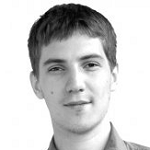
KaramshukDr. Dmytro Karamshuk

Country: Ukraine, United Kingdom

Affiliation: King’s College London, Department of Informatics

Curriculum Vitae: I got an MSc. in computer science and engineering from the National University of Ukraine "KPI" in 2007. From 2005 to 2010 I worked at a co-founded software company Stanfy LLC. I hold a PhD in computer science from IMT Institute for Advanced Studies, Lucca where I worked in collaboration with the Institute for Informatics and Telematics of National Research Council (IIT-CNR), Pisa. In 2012 I was a visiting researcher at the Computer Laboratory, University of Cambridge. Since 2013 I’m a postdoc at King's College London.

Research interests: data mining, complex networks, machine learning, human mobility, mobile networks

Email: This email address is being protected from spambots. You need JavaScript enabled to view it.


  • Smart Cities
  • 3D Printing
  • Computational Neuroscience
  • Applied Computer Science
  • Poster Session
  • Plenary Session
  • Student Projects
    • Project Fair
  • AACIMP 2013
  • AACIMP 2014
Timber by EMSIEN 3 Ltd BG

About us

  • What is AACIMP?
  • Organizers
  • Partners
  • Contact us

Participation

  • How to apply?
  • Application form
  • Registration fees
  • How to pay?
  • Discounts & scholarships
  • FAQ
  • Home
  • Site map
  • Contact us

Built with HTML5 and CSS3
Copyright © 2006—2015 Student Science Association

Site support — Zina Design Studio
  • About us
    • What is AACIMP?
    • Organizers
    • Contact us
    • Kyiv
  • Partners
    • How to get involved
    • Financial
    • Media
    • Corporate Sponsorship
    • Travel
    • In kind
  • Program
    • Smart Cities
    • 3D Printing
    • Computational Neuroscience
    • Applied Computer Science
    • Poster Session
    • Plenary Session
    • Student Projects
    • AACIMP 2013
    • AACIMP 2014
  • Participation
    • General schedule
    • How to apply?
    • Eligible students
    • Student responsibilities
  • Tuition
    • Registration fees
    • How to pay?
    • Discounts & scholarships
  • Housing
    • Accommodation
    • Dining services
    • Travel information
    • Visa information
  • Impressions
    • Photo memories
    • Video memories
    • Organizers impressions
    • Alumni opinions
  • Promotion
  • FAQ